 Jared Naude (77)
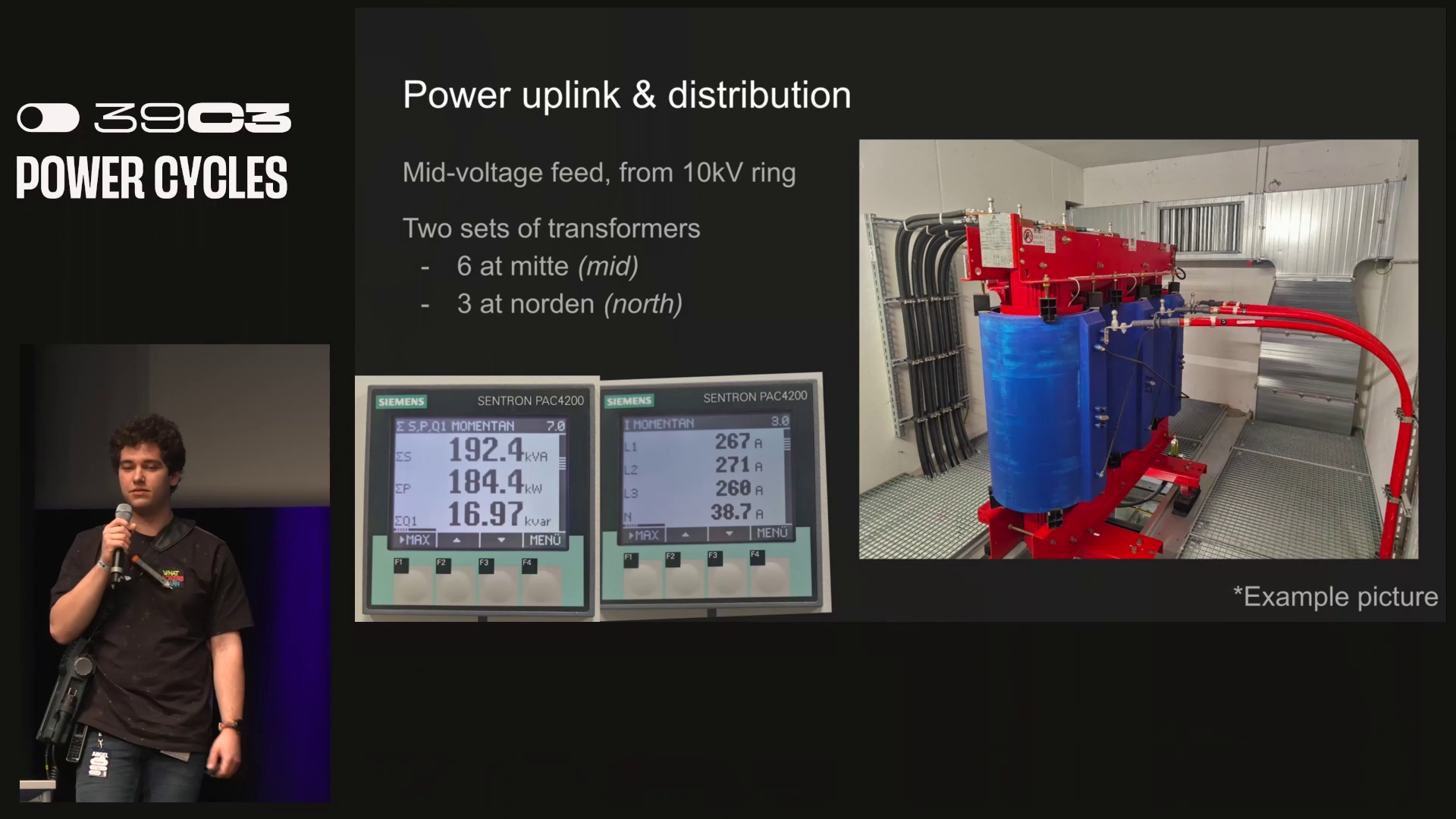
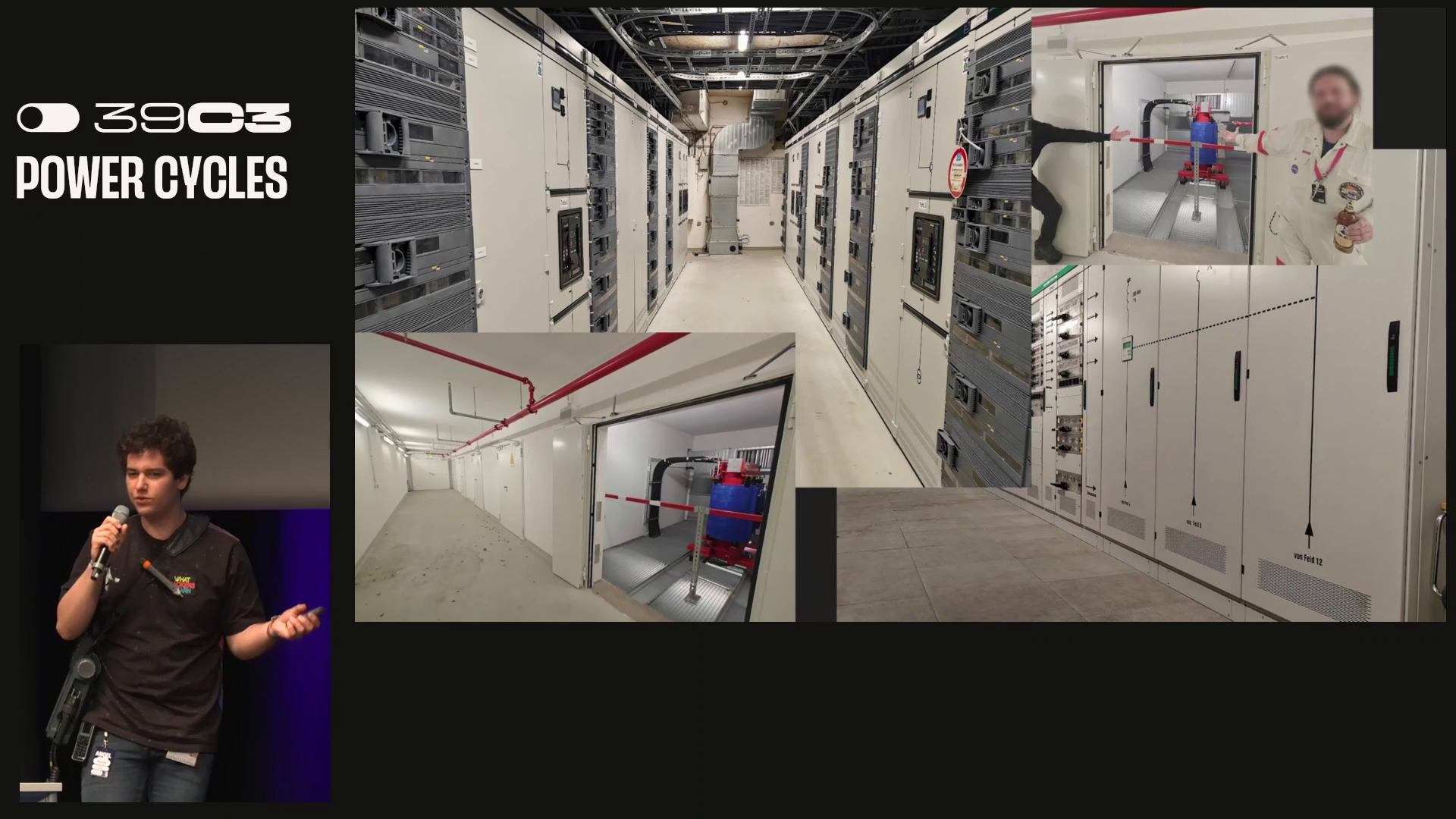
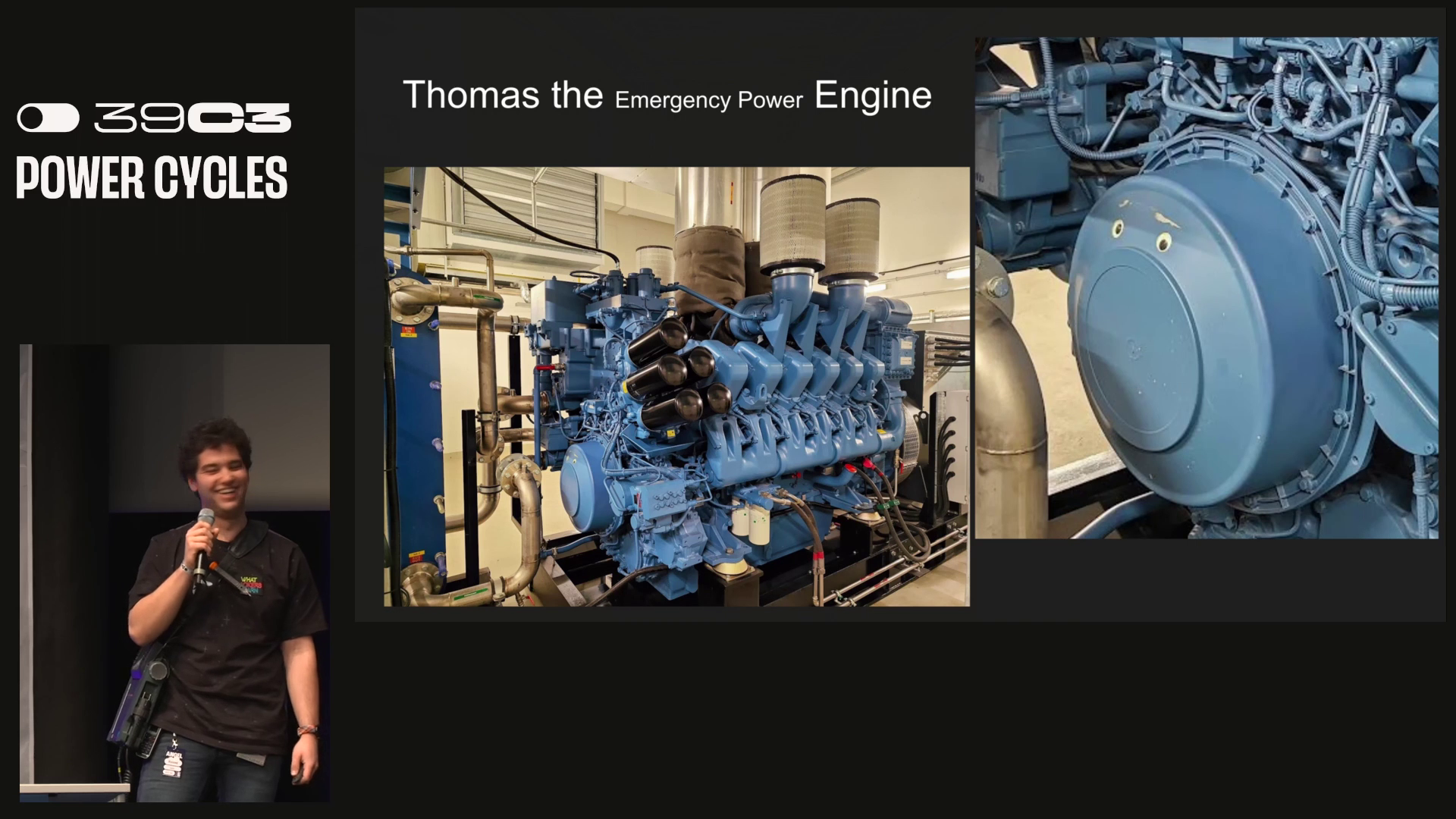
Congress is powered by a 10kV ring through 2 transformers. There is an emergency "thomas the tank engine" generator for emergency power. #39c3
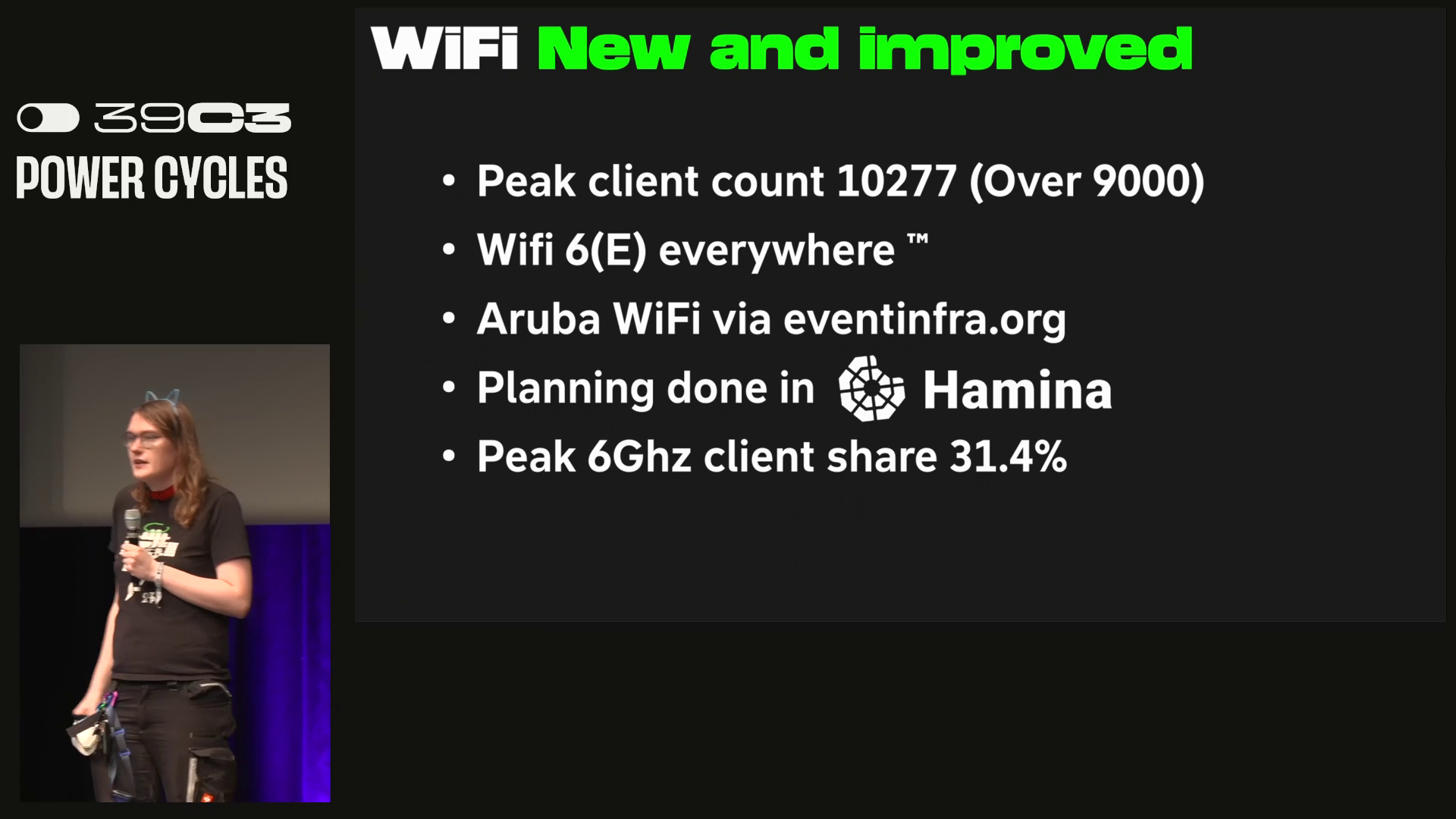
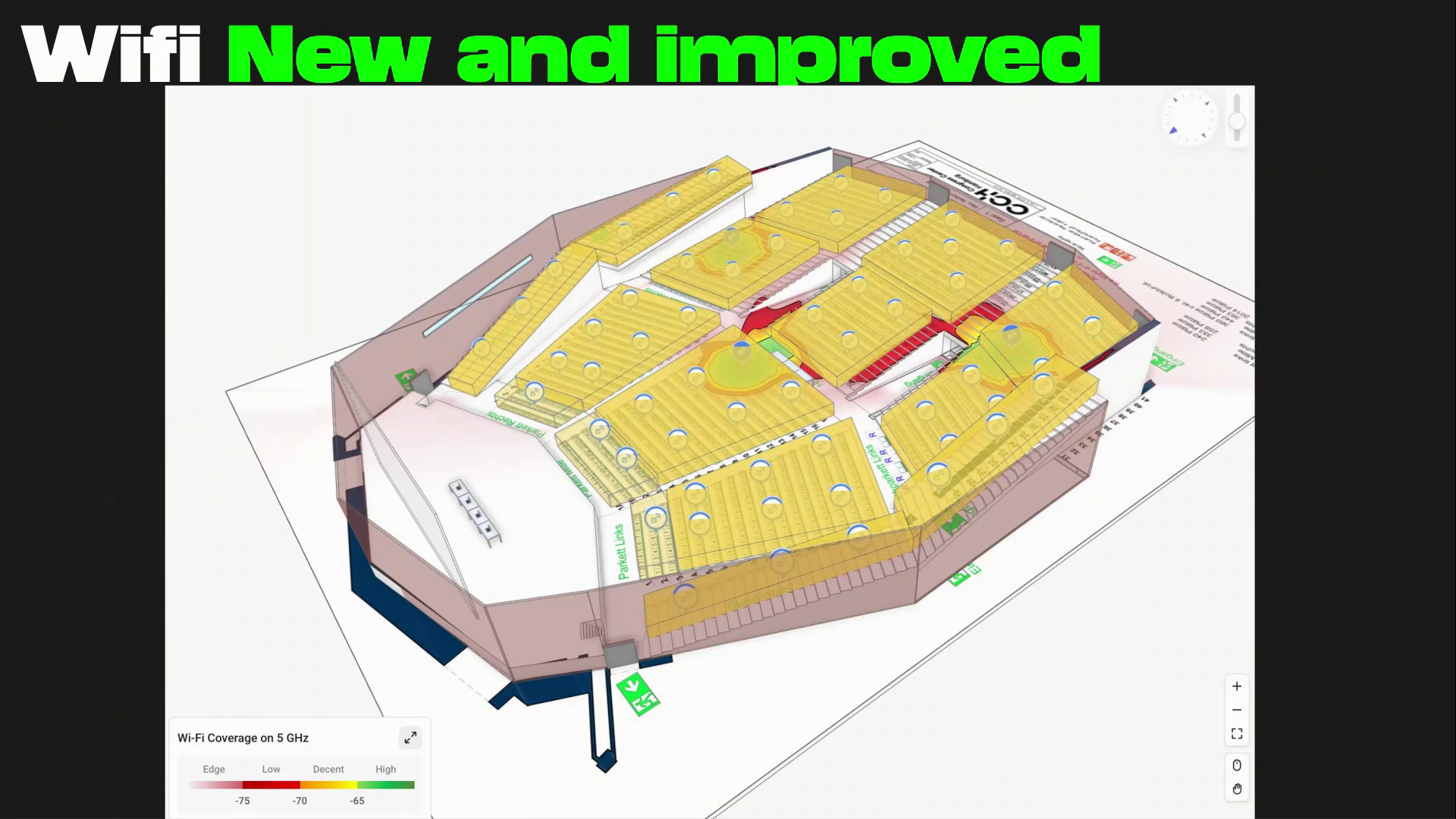
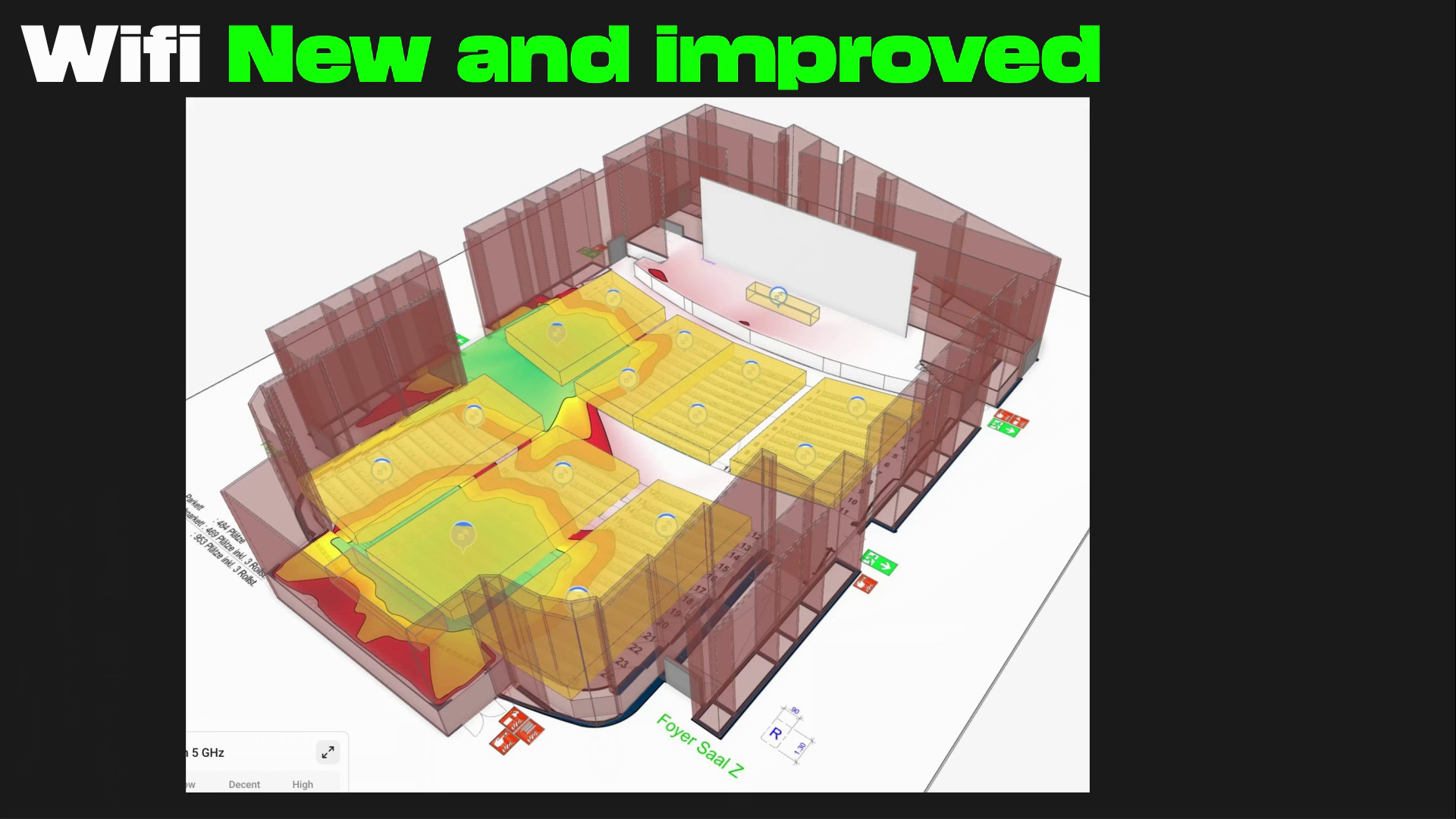
The team managed to deploy WiFi 6 across the bulding with a peak of 10277 clients. Planning was done in Hamina which made the wifi deployment better. Almost a third of capacity was over 6Ghz. #39c3
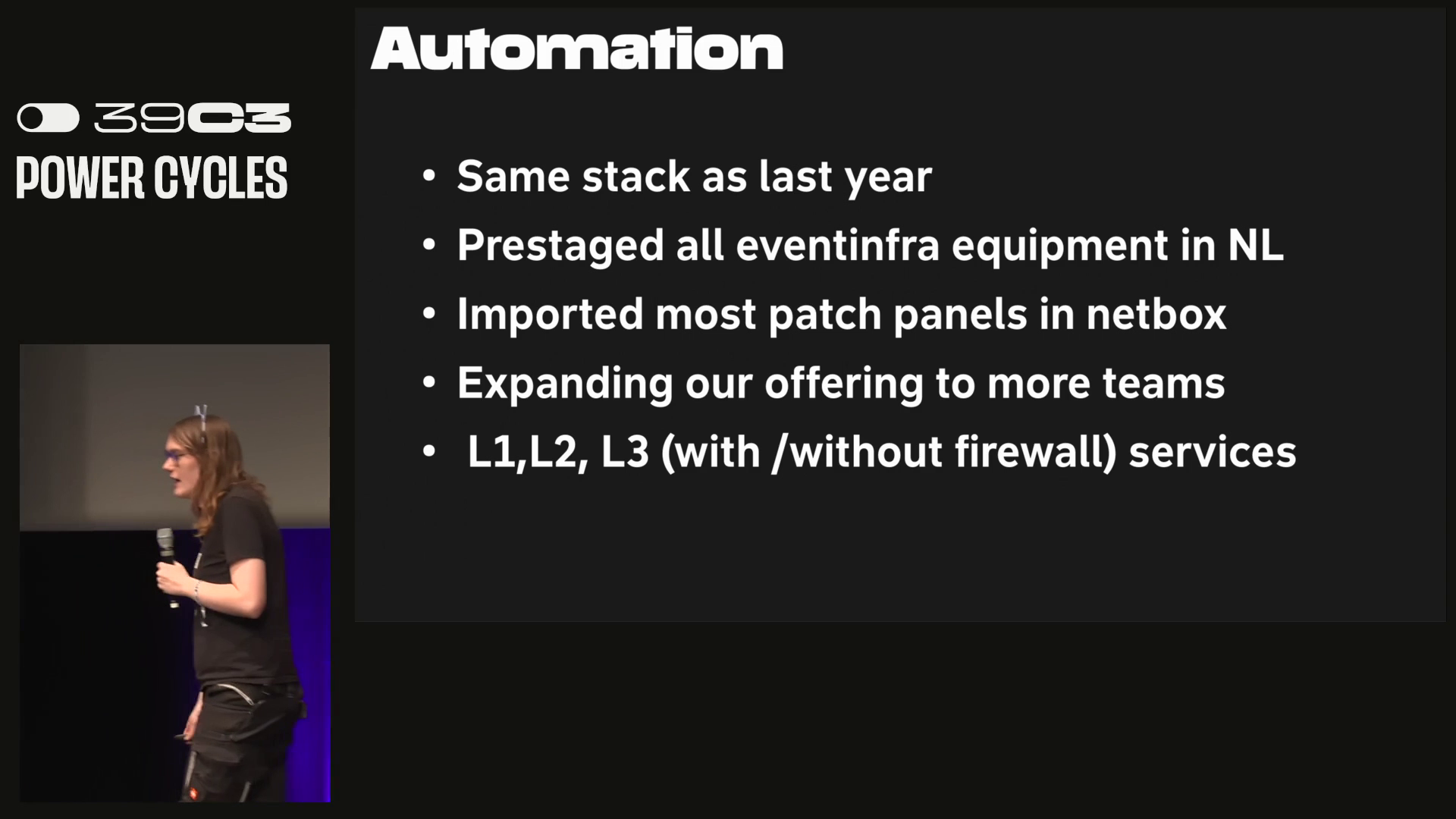
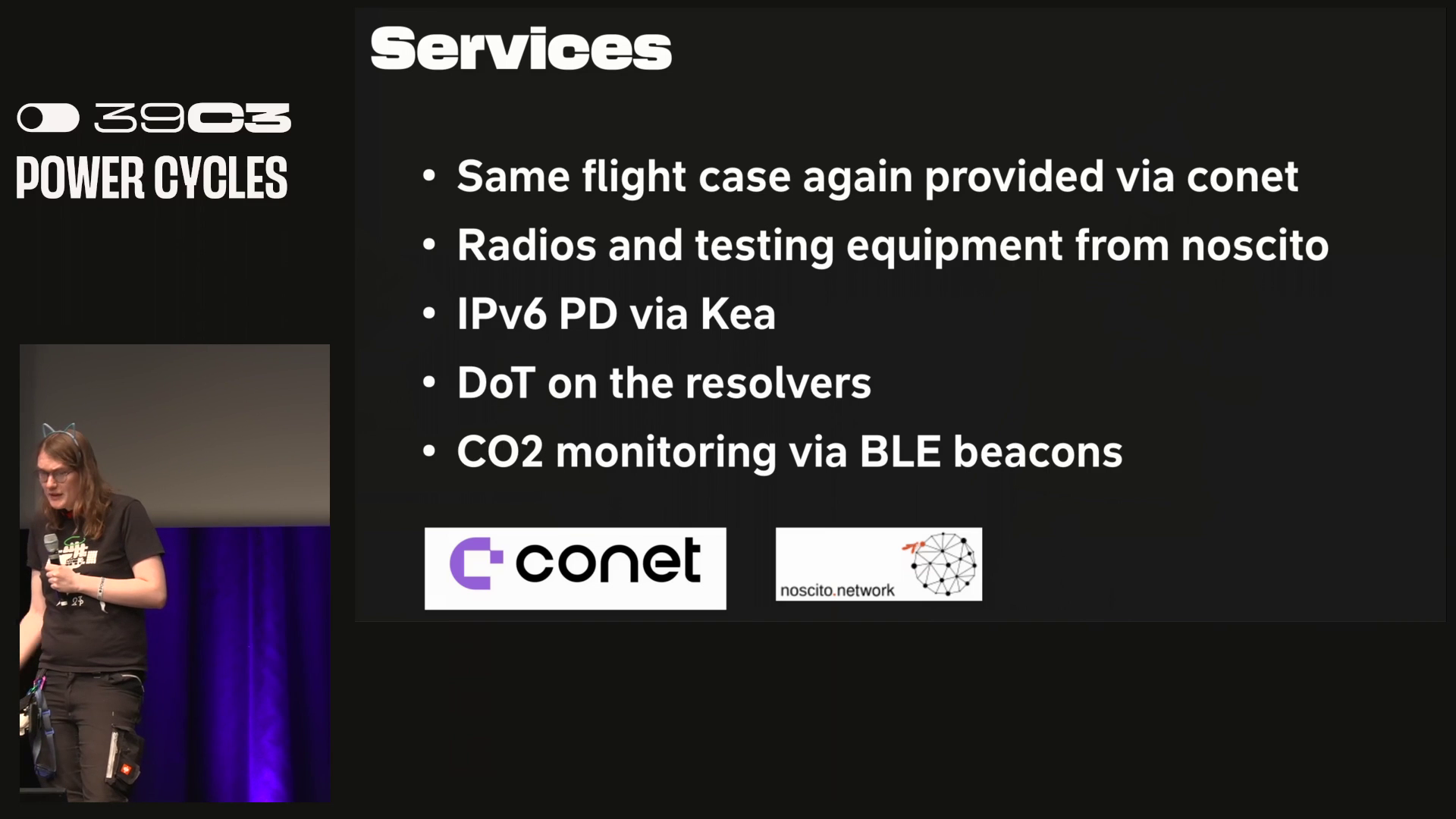
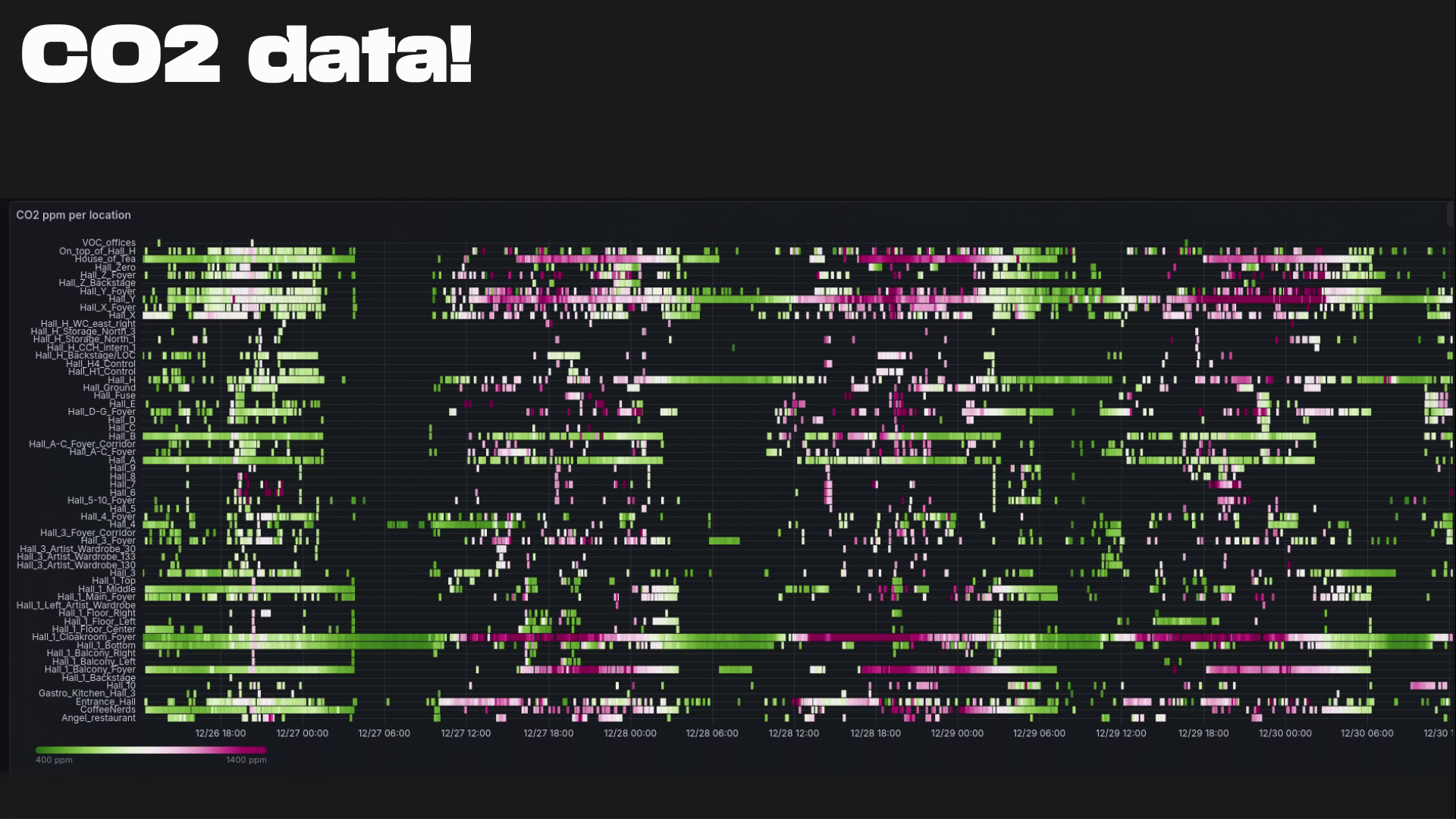
The team used the same automation stack as last year. A lot of equipment was prestaged which made deployment faster. All of the patch panels were imported into netbox. DoT on the resolvers and C02 monitoring was done by BLE beacons. #39c3
One speaker had 170 slides for a 45 minute talk and had practiced to get a high word per minute rate which made this very difficult to translate. Doing this takes a significant toll on the translation team. #39c3
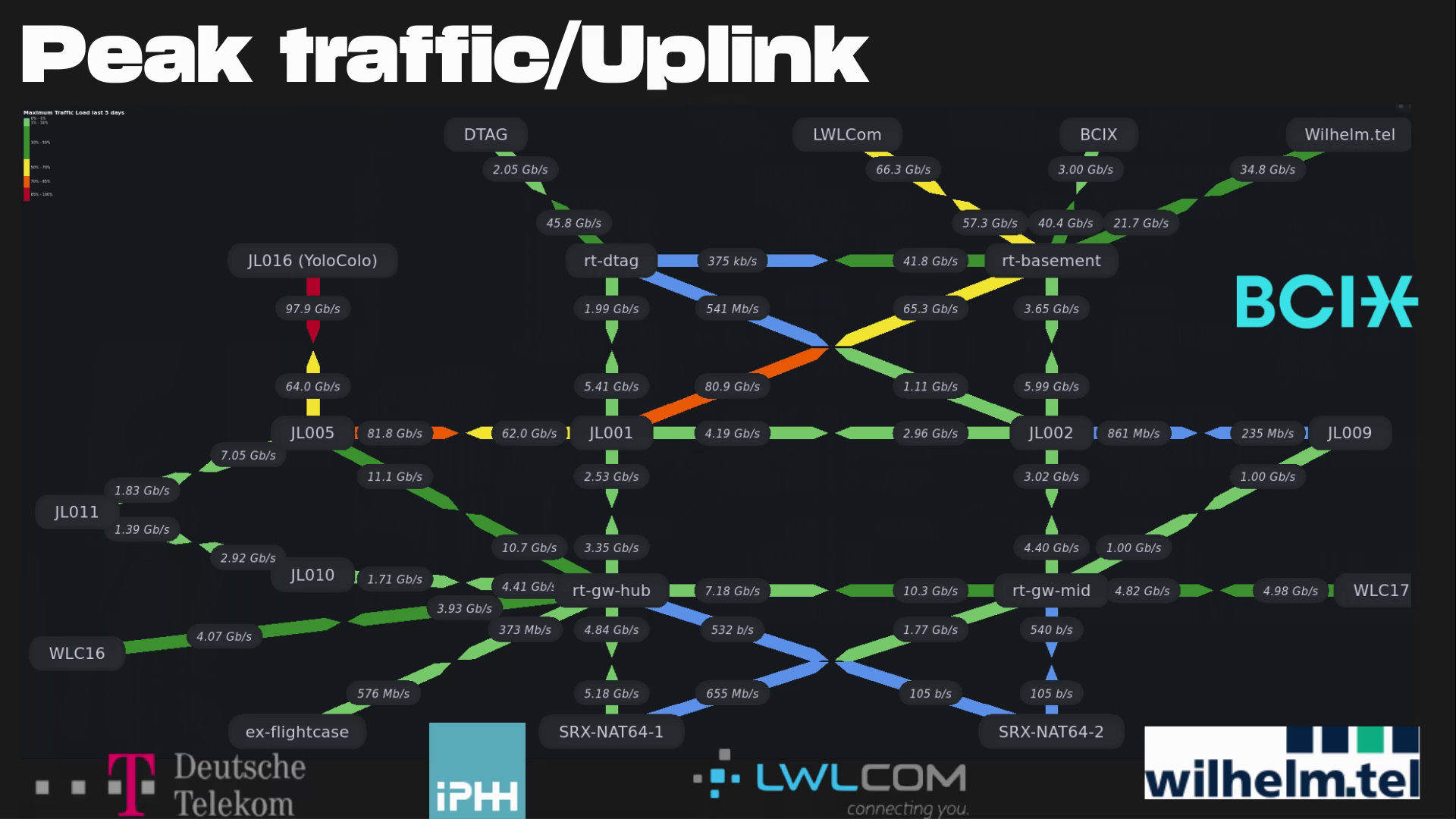
Weather map of the traffic following through congress. The YoloColo saturated the 100 Gbps link. 300 Gbit of capacity was provided by several partners. #39c3
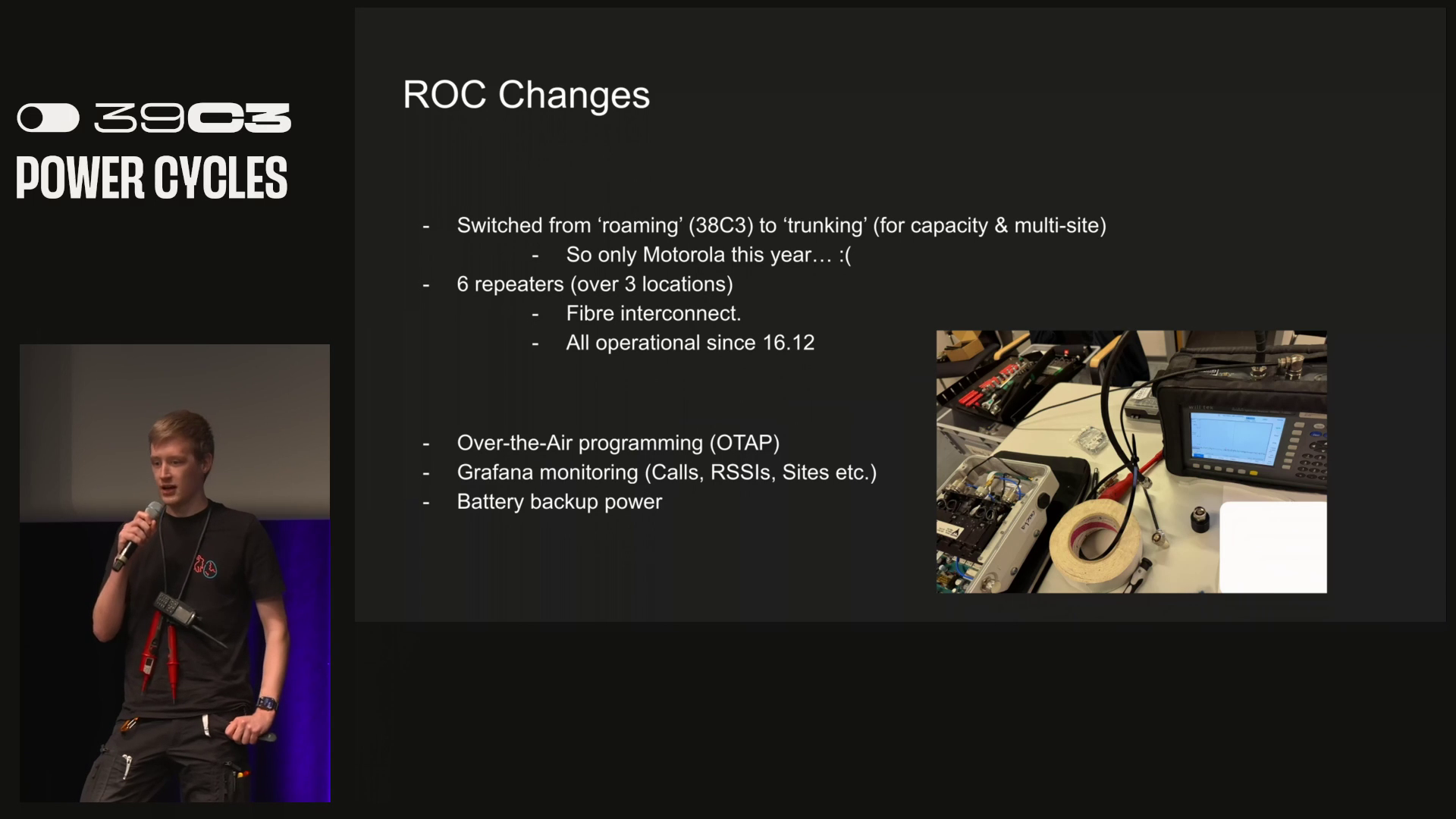
The team handed out a bunch of keys and deployed radios in a trunking topology (instead of roaming). 6 repeaters were deployed. #39c3
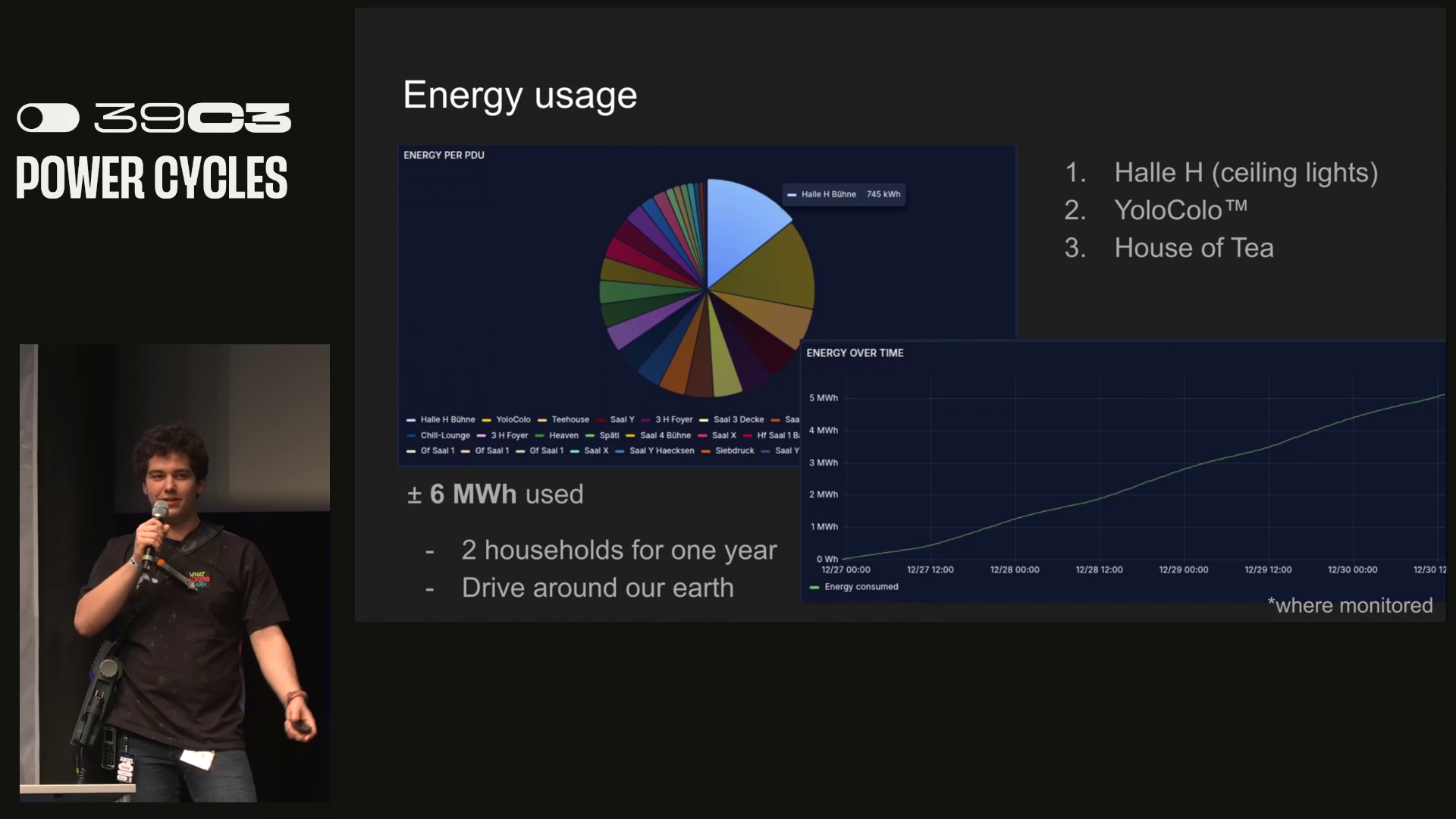
The congress used +/- 6Mwh of power (for the monitored usage) and the following used the most power:
1) Halle H (ceiling lights)
2) YoloColo
3) House of Tea
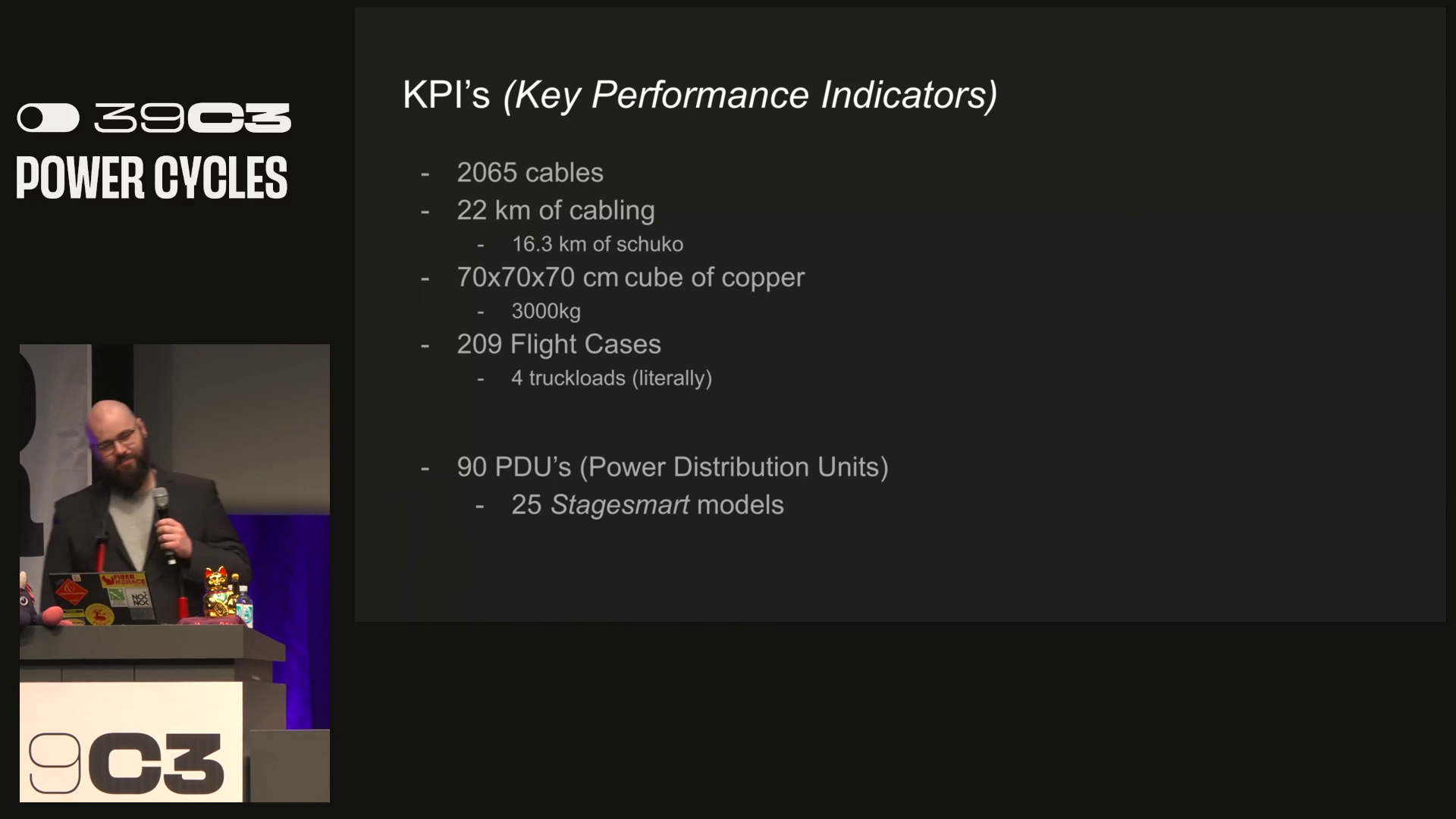
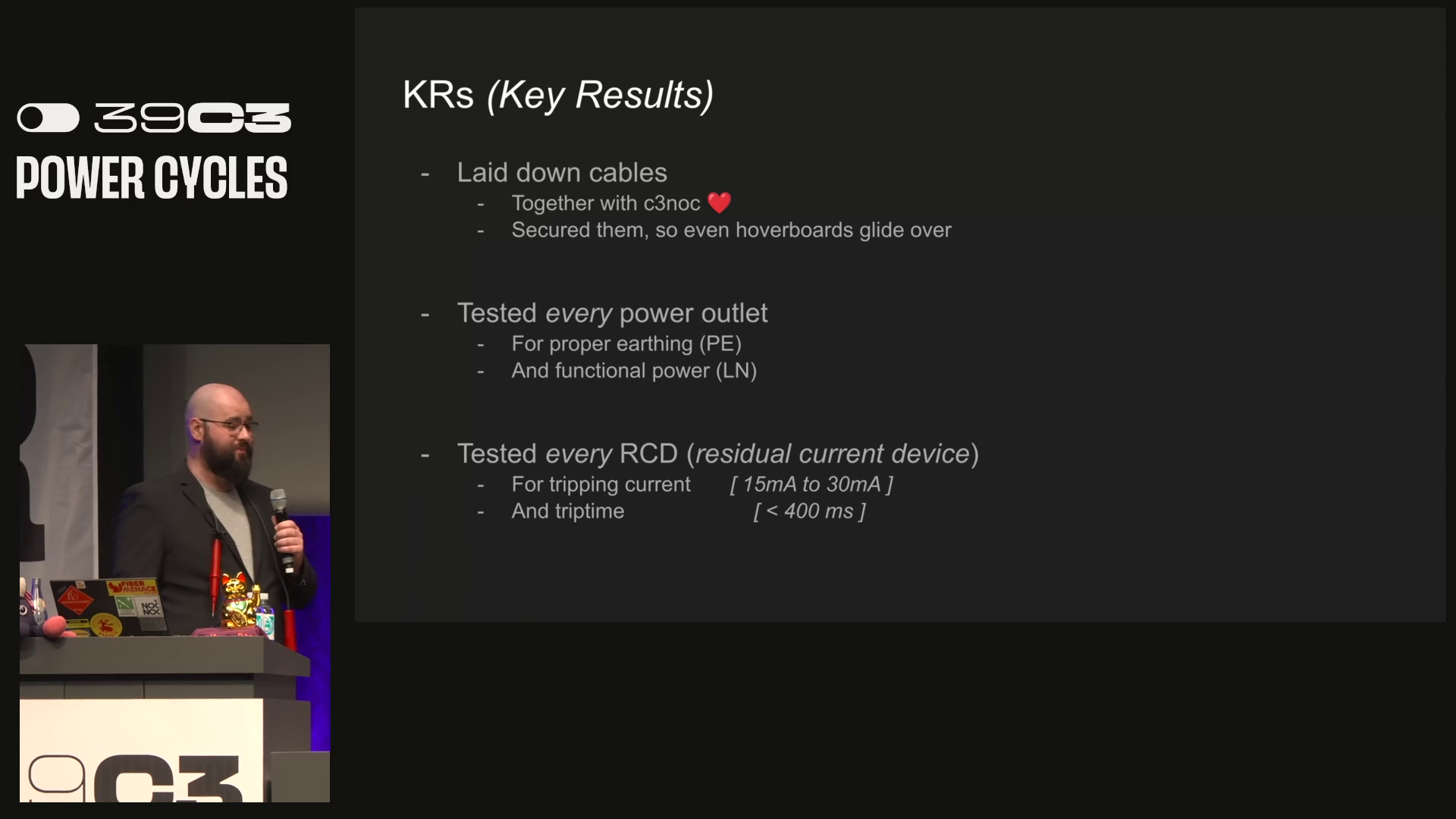
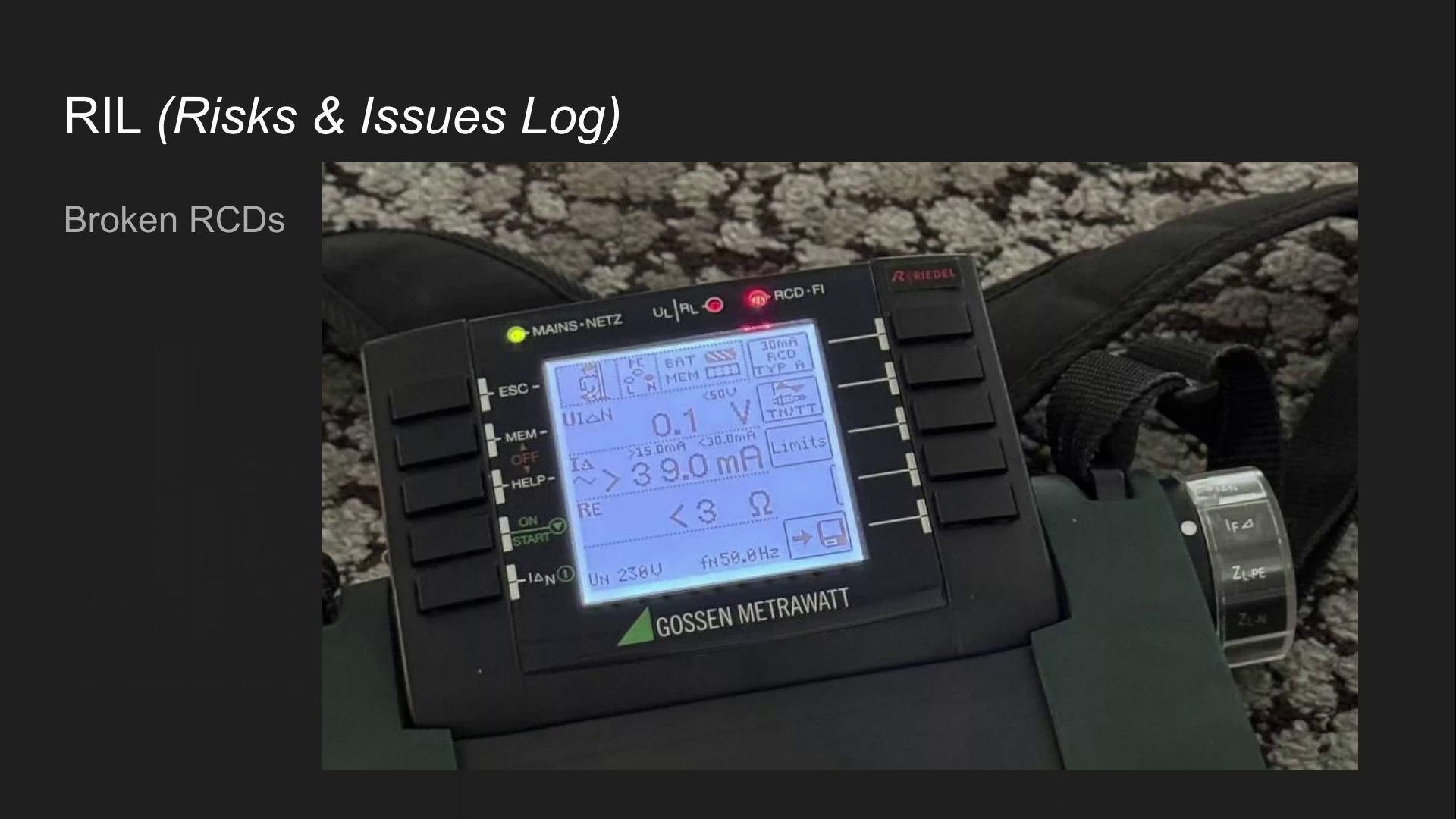
The power team laid 20655 cables which span 22km of cables which weighed will be 3 tons of copper. They brought 209 flight cases and deployed 90 PDUs of which 25 were stagesmart models. They also tested RCDs for trip times.
#39c3
Time for CCC Internetmanufaktur™:
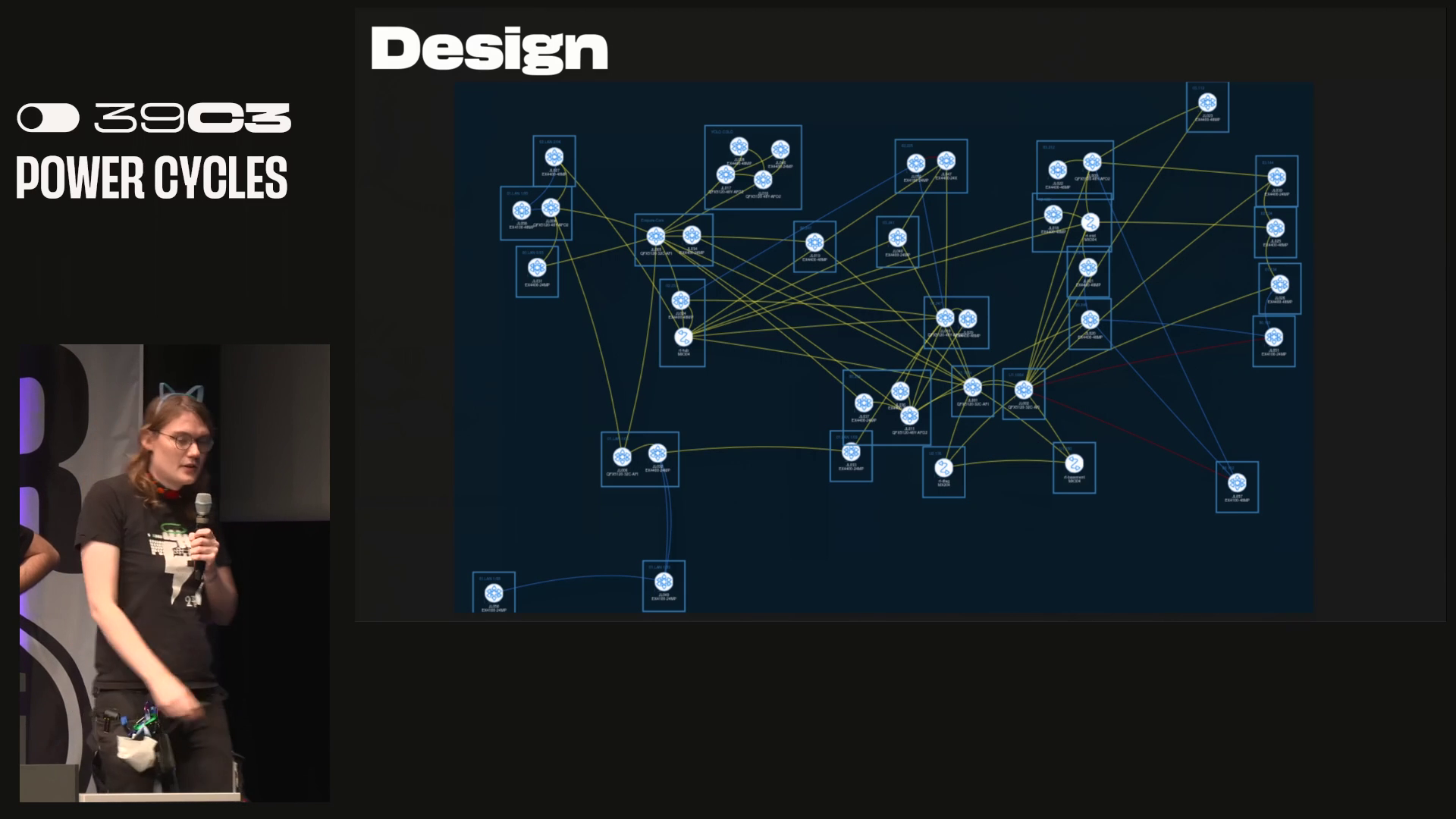
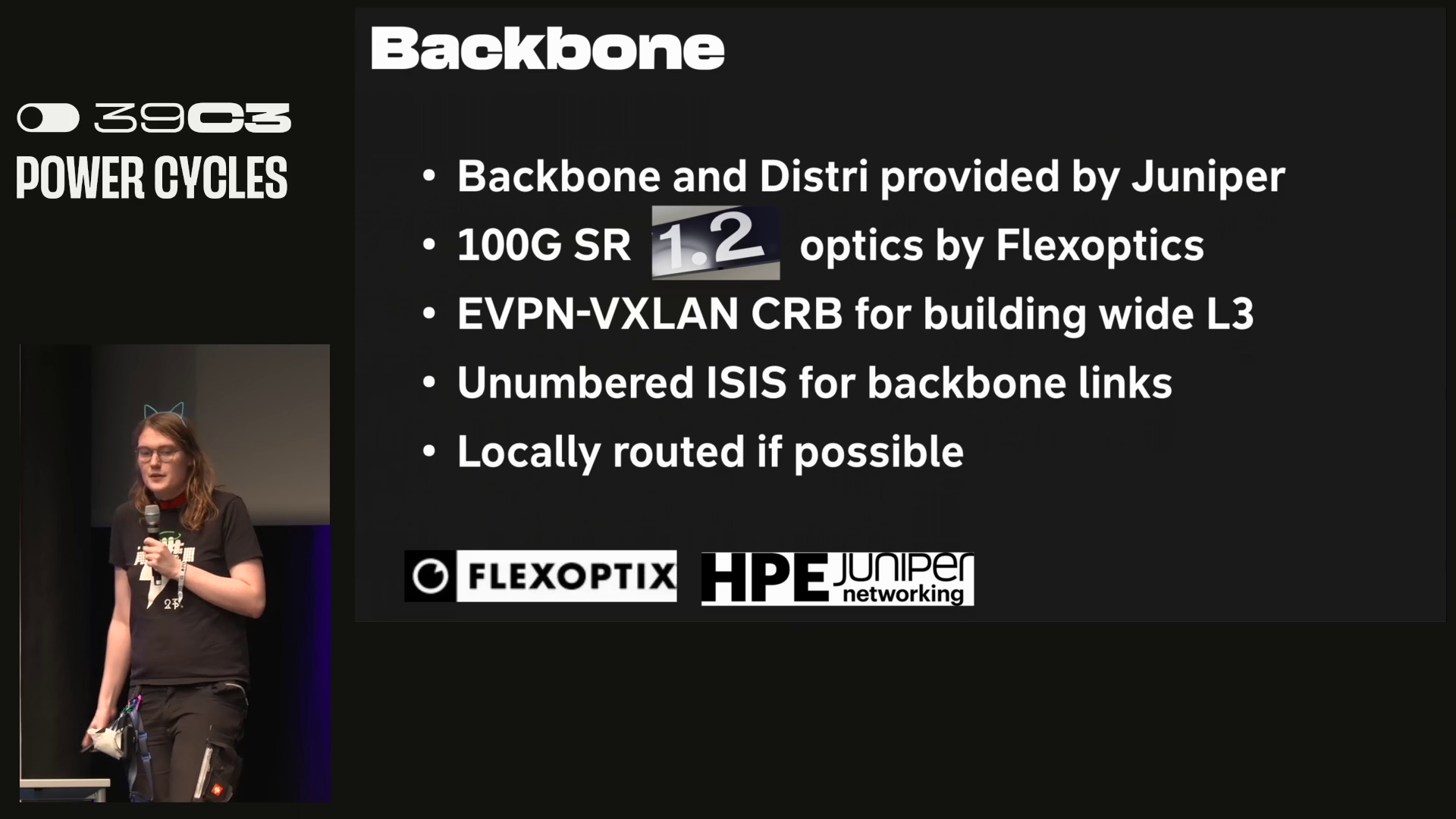
All of these links are 100Gbps. Backbone and distribution was done by Juniper. The optics were provided by Flex Optics. EVPN-VXLAN CRB for building wide L3. #39c3