
 Kit 🔻 (32)
Sensitive content : disordered eating
These models are ingesting everything and anything, indiscriminately. They're over-eating
At a certain point they'll be ingesting their own excrement & barfing that up, suggests Leenaars
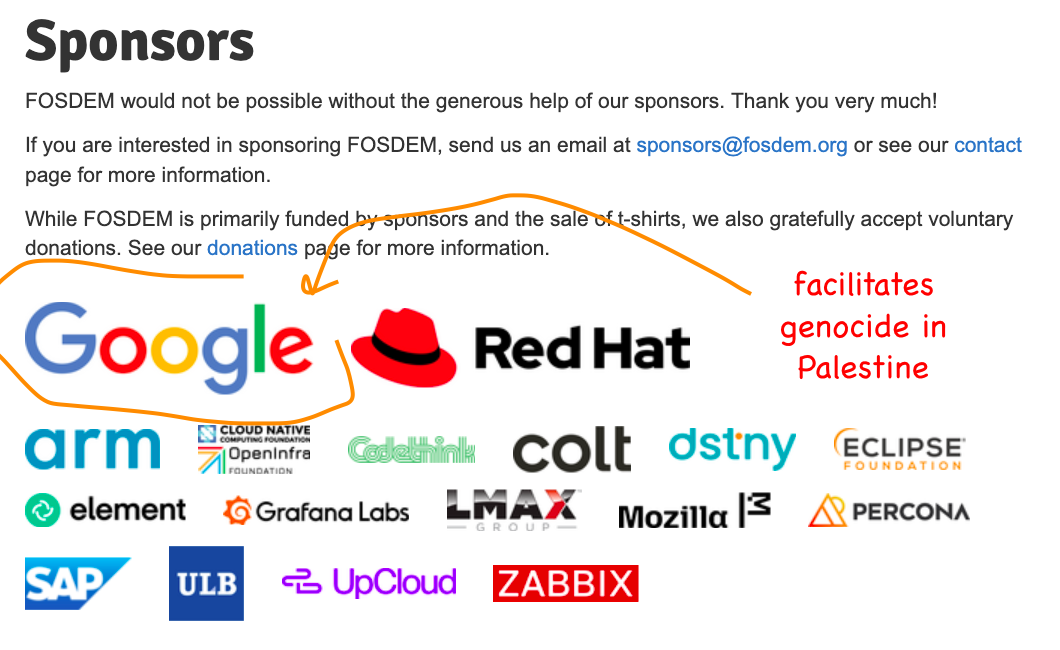
Curious (or not?) that one of FOSDEM 2026's sponsors is google, which provides part of the tech infrastructure for israel to commit genocide in Palestine through its participation in project Nimbus...
some refs:
FOSDEM starting in a bit!
Some talks that could be interesting for workers:
31 Jan, 10:00
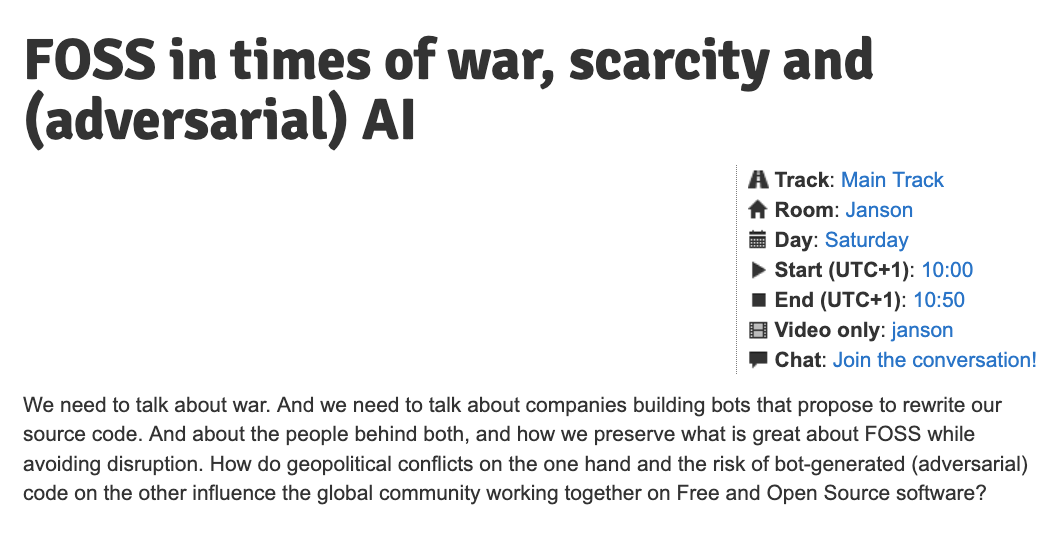
FOSS in times of war, scarcity and (adversarial) AI -> war always most hurts working people
We need to talk about war. And we need to talk about companies building bots that propose to rewrite our source code. And about the people behind both, and how we preserve what is great about FOSS while avoiding disruption. How do geopolitical conflicts on the one hand and the risk of bot-generated (adversarial) code on the other influence the global community working together on Free and Open Source software?
cc @techwerkers
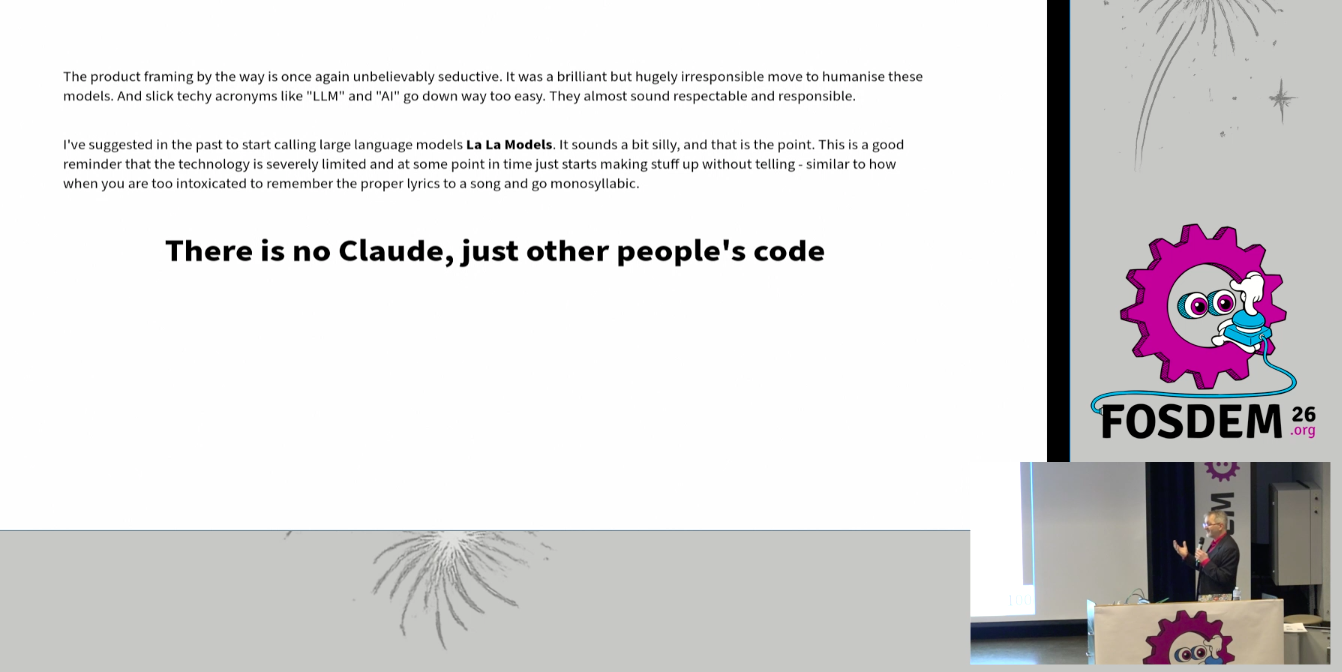
"There's no Claude, there's just other people's code", Leenaars offers a reality check
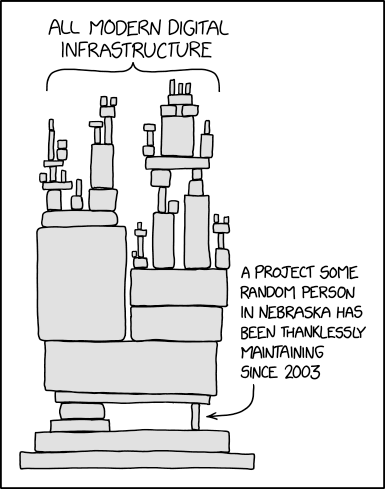
What and who do you depend on in your projects? How fragile is that infrastructure?
Dependency on short-form content & LLMs is hampering childrens' brain development, suggests Leenaars
It's a form of dementia, but worse, because they're not even developing a fully functioning brains
(disclaimer: i don't know the exact studies on this, just reporting the talk)
It's Stockholm syndrome, Leenaars says.
Mentions the example of the Dutch government - ministry of Finance making a big project out of moving to Microsoft, even though this creates:
- More dependence on US-based tools
- Productivity loss
Are these big tech companies your friends? Will they take care of you?
So many of these companies offer convenience. But at what cost?
You become dependent.
There's abuse
There's a big opportunity at this moment. Society is in panic mode, because it's become too dependent
And society is looking at tech workers for a solution
Exhibit 1: Github (= Microsoft)
WIth a repo on there, even if you don't share you code with anyone, you still share it with Github/MSFT, which in turn shares it with the US government
"We've been played", says Leenaars